Information Disclosure in Line with TCFD and TNFD Recommendations
Climate change and nature degradation cause a variety of problems: in agriculture, increases in pests and diseases, declines in crop yields and quality, and shifts in production areas; and more broadly, degradation of forests and soils, and loss of biodiversity.
Our group upholds the corporate philosophy of “Protecting and Nurturing Life and Nature,” and has identified “Reducing Climate Change and Environmental Impact,” “Contributing to Biodiversity,” and “Contributing to a Circular Economy” as our material issues. We have also established a Basic Sustainability Policy and a Basic Environmental Policy, and under these policies, we aim to achieve both improved agricultural productivity and sustainability.
Support for TCFD
Kumiai Chemical Group has grown through its core business of agricultural chemicals, which are indispensable for agriculture, with the main theme of "protecting and nurturing life and nature.“ Our business is closely related to the natural environment, and responding to climate change caused by global warming is an important issue for ensuring the sustainability of the company's management base.
We view the adverse effects of climate change, including natural disasters such as torrential rains and floods associated with global warming, and heat waves and droughts caused by rising temperatures, as business risks, and we strive to work toward a decarbonized society while also considering the aspect of opportunity of a new business in formulating our corporate strategy.
Kumiai Chemical Group supports the recommendations of the Task Force on Climate-related Financial Disclosures (TCFD) and will proactively communicate our climate change initiatives in line with the framework of the TCFD recommendations.

Governance to Promote Sustainability
The Sustainability Promotion Committee, chaired by the Representative Director, President and composed of full-time Directors and Executive Officers, formulates strategies on sustainability issues, such as “mitigation of climate change and environmental impact” and “human capital development / human capital strategy based on the idea of human capital,” manages the progress of the action plan for each issue, and also formulates information disclosure strategies. The Responsible Care Promotion Committee also makes decisions on policies related to occupational health and safety and chemical substance management, and discusses measures to address these issues.
The Board of Directors comprises nine members, including Outside Directors with expertise in the environmental field. Based on reports from the Sustainability Promotion Committee and periodic updates from the Director, Senior Managing Executive Officer in charge of sustainability, the Board resolves and oversees the establishment and progress of key environmental policies and KPIs.
The Nomination and Remuneration Committee reviews our efforts in reducing greenhouse gas (GHG) emissions and their results, as well as our initiatives and achievements in the areas of anti-corruption, human rights, and decent work, and incorporates these factors into the determination of remuneration for Directors.
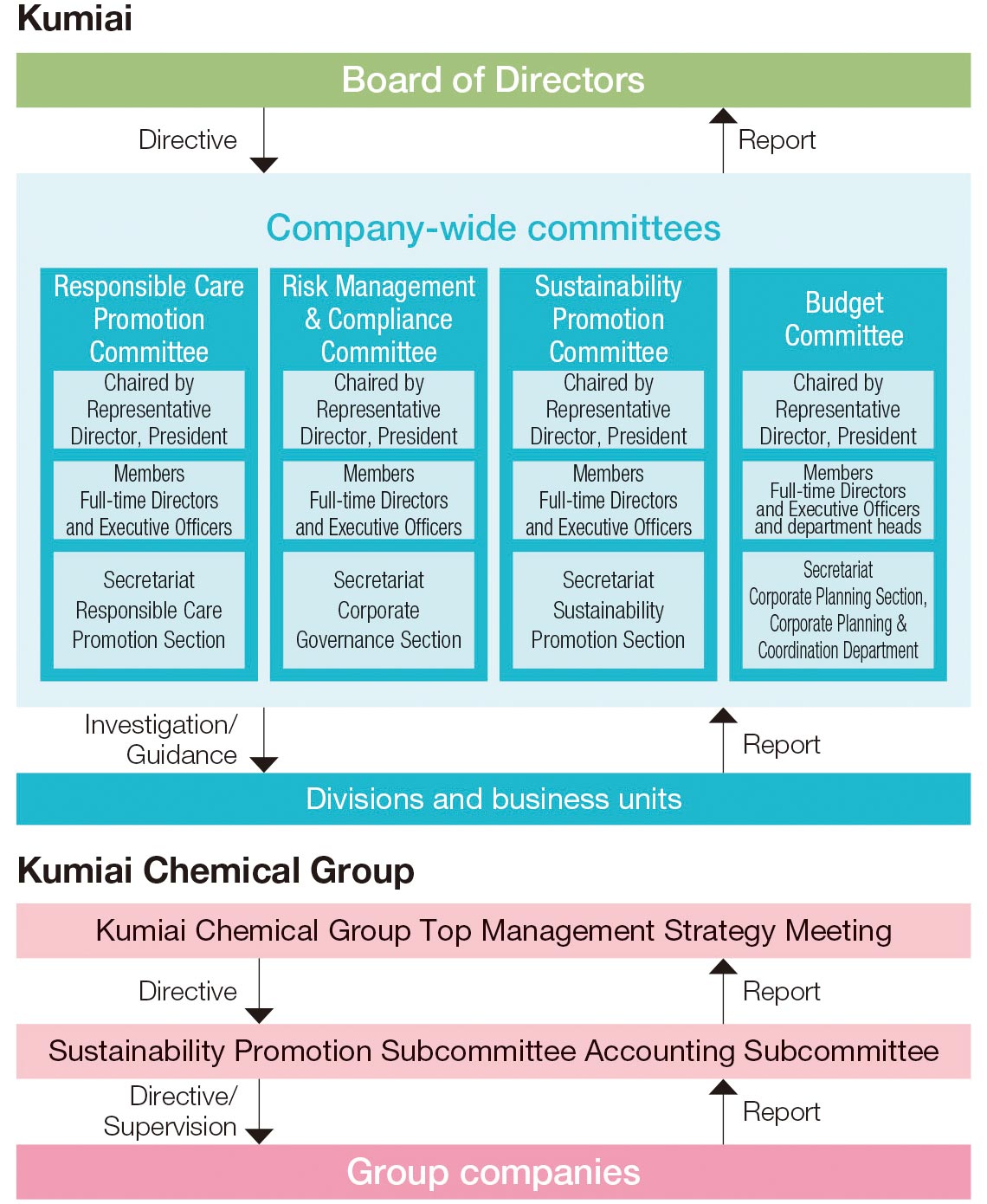
The Kumiai Chemical Group Top Management Strategy Meeting has been established to achieve sustainable growth and enhance corporate value over the medium- to long-term by ensuring stable business operations, promoting sustainability management, and achieving effective corporate governance. In line with the Kumiai Chemical Group Basic Policy on Sustainability, the Meeting is working to share and implement measures to help realize a sustainable society that meets the expectations and needs of our stakeholders. Under the Kumiai Chemical Group Top Management Strategy Meeting, the Sustainability Promotion Subcommittee is responsible for effectively implementing measures to promote sustainability management.
Human Rights Policy and Engagement for Stakeholders
Considering that respecting human rights is the foundation of sustainability management, our group has endorsed and respects the International Bill of Human Rights and the Declaration on Fundamental Principles and Rights at Work issued by the International Labour Organization (ILO) and has established the Kumiai Chemical Group Basic Policy on Human Rights.
Moreover, we conduct human rights due diligence in accordance with the United Nations Guiding Principles on Business and Human Rights, and collaborate with all officers and employees of our group and other stakeholders to promote respect for human rights.
Our group is implementing Responsible Care activities as part of sustainability management. In the chemical industry, Responsible Care refers to activities that ensure the safety, health, and environmental protection of related people inside and outside Kumiai throughout all processes—including research and development, mineral extraction, procurement, production, distribution, sales, and use by customers through to disposal. These activities also involve disclosing the results and engaging in dialogue and communication with society. As part of these efforts, our group organizes annual tours of our factories and institutes for local residents and users.
Furthermore, through initiatives such as providing users (pesticide users) with information on proper and effective usage methods and on-site support for product application, as well as disseminating information to general consumers, visiting elementary schools to give classes, and organizing food and agriculture discussion sessions led by high school students, we actively communicate with both users and general consumers can handle our products and the crops grown using them safely and with confidence.
Risk Management
We identify risks and opportunities recognized by our divisions, and also identify issues by referring to the recommendations of external organizations such as TCFD*1 and TNFD*2, as well as climate- and nature-related risks and opportunities recognized by other companies in the same industry. The degree of importance of each issue identified is determined by conducting impact assessments, taking into account the financial impact. Risk issues identified are discussed once a year by the Risk Management & Compliance Committee, a company-wide committee, and measures to address the issues are determined.
- *1TCFD (Task Force on Climate-related Financial Disclosures)
- *2TNFD (Taskforce on Nature-related Financial Disclosures)
Climate Change
Strategy
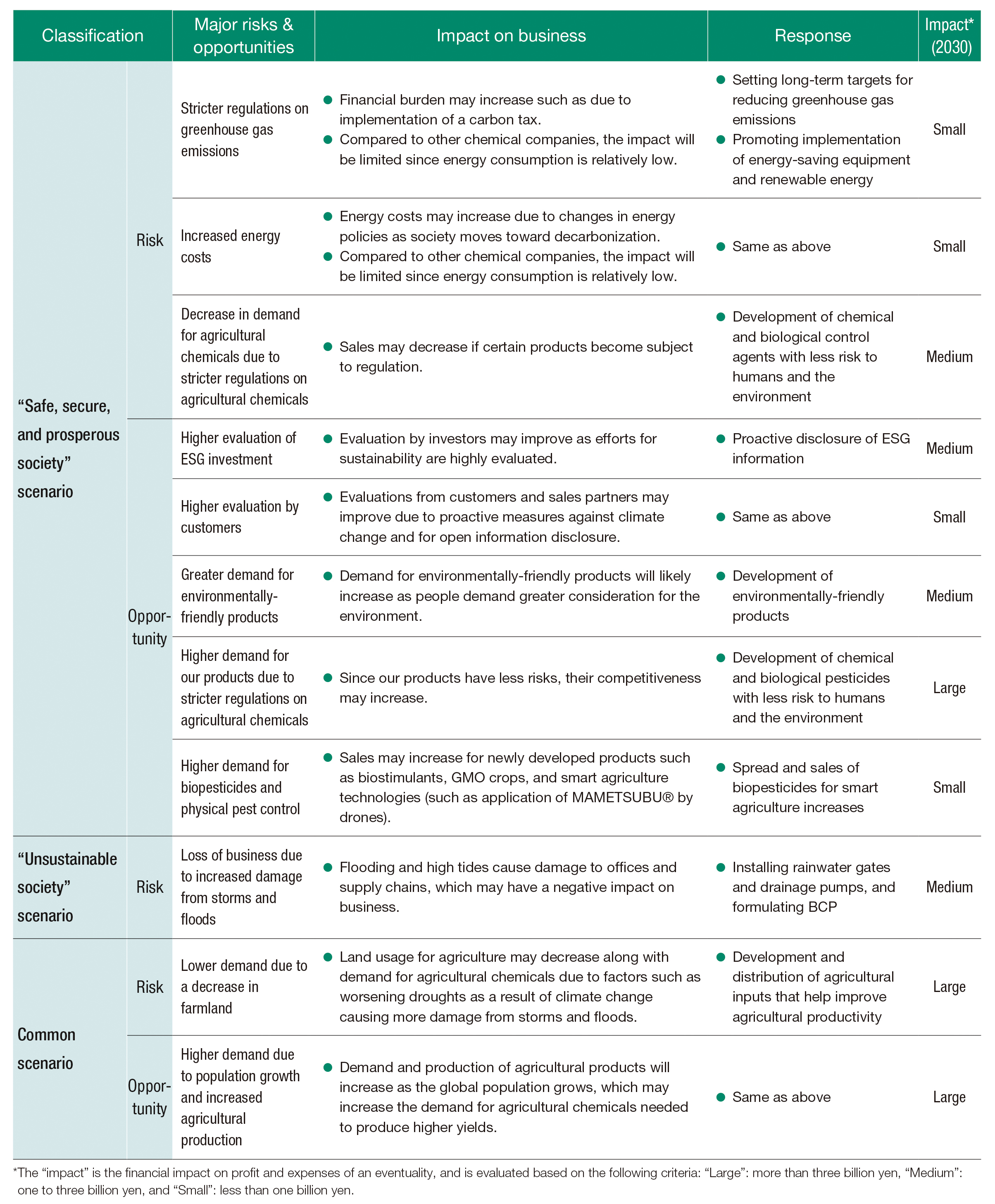
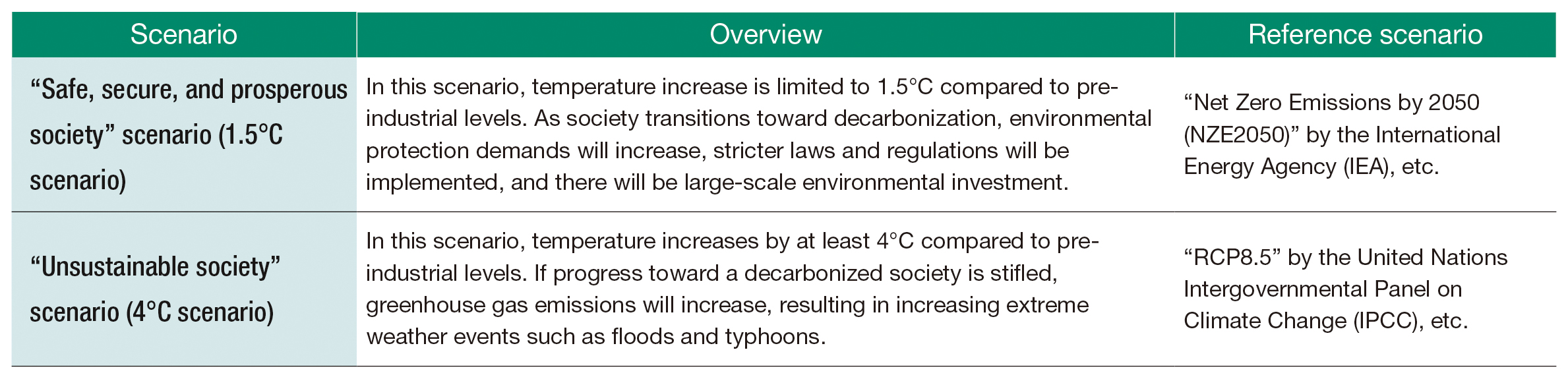
Our group has identified “mitigation of climate change and environmental impact” as one of its material issues and has assessed its climate-related risks and opportunities We have conducted scenario analysis by setting the“safe, secure, and prosperous society” scenario (called the 1.5°C scenario) that we aim to achieve and the “unsustainable society” scenario (called the 4°C scenario) where social issues such as climate change worsen, and have evaluated the impacts of risks and opportunities on our group. Measures for major risks and opportunities that have a large impact are being examined. The contents of these examinations are reported to the Sustainability Promotion Committee and Management, including the Representative Director and President, discusses climate change risks and opportunities.
Indicators and Targets
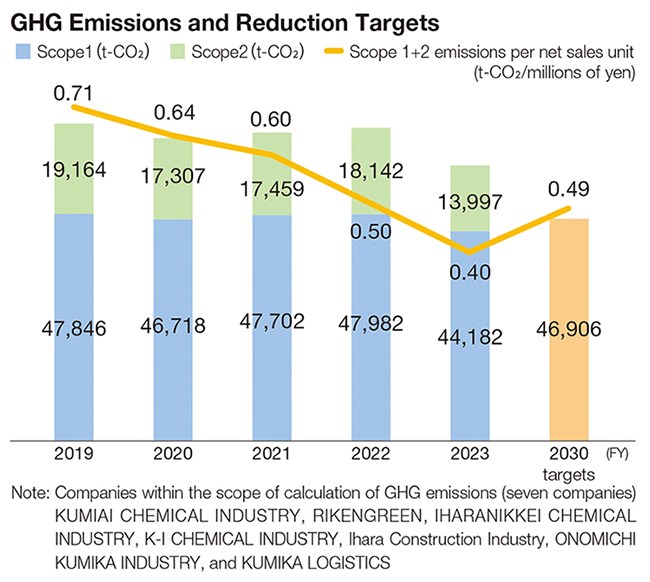
Our group supports the Paris Agreement and has identified “mitigation of climate change and environmental impact” as one of its material issues. Setting FY2019 as the reference year, we aim to reduce Scope 1 and 2 greenhouse gas (GHG) emissions of our seven key group companies by 30% compared to FY2019 by FY2030. Specifically, we introduced CO₂-free electricity generated from renewable energy sources at our main factories and institutes, including the Shizuoka Factory. We also promoted fuel conversion from heavy oil to fuels with lower GHG emissions, thereby continuing to reduce GHG emissions from our business activities. By FY2048, the year of our 100th anniversary, we aim to achieve carbon neutrality by reducing the Scope 1 and 2 emissions of our seven key group companies to virtually zero. In the future, we will also consider the use of low-carbon fuels (such as hydrogen and ammonia), innovative carbon-negative technologies, and carbon credits, as our carbon neutrality goals are difficult to achieve with existing technologies alone. Regarding the progress to date toward achieving the reduction targets, we believe that our group is making good progress in reducing GHG emissions, as our GHG emissions in FY2025 decreased by approximately 29% compared to FY2019. Since FY2024, we have conducted third-party verification of our GHG emissions to ensure the transparency and accuracy of our calculation data. Furthermore, we support the Japanese government's countermeasures against global warming and conduct corporate activities in compliance with the Act on the Rational Use of Energy (Energy Conservation Act) and the Act on Promotion of Global Warming Countermeasures. We aim to achieve an annual reduction of 1% or more in either the five-year average energy intensity or the five-year average electricity demand optimization intensity, both of which are non-binding targets under the Energy Conservation Act. Through continuous efforts to reduce environmental impacts, we will strive to achieve the targets and disclose related information.
Natural Capital and Biodiversity
Strategy
Our group recognizes the importance of enhancing business sustainability by identifying nature-related risks and opportunities across the entire value chain—from product research and development and the procurement of raw materials for agricultural chemicals to production and use and mitigating these risks while maximizing opportunities. For this reason, we conducted an analysis and assessment of our value chain using the LEAP approach, as recommended by the TNFD. This analysis targeted the Agricultural Chemicals and Agriculture-Related Business, which accounts for approximately 80% of our sales. Given the breadth of our product lineup and its broad geographical reach, our regional assessment under the LEAP approach focused on areas relevant to our mainstay products.
- *This is an approach proposed by the TNFD to systematically assess the relationship between nature and business. It consists of four phases: “Locate” (identifying key points of contact with nature), “Evaluate” (assessing the relationship between the entire value chain and nature), “Assess” (identifying risks and opportunities), and “Prepare” (developing responses to risks and opportunities).
- *1Includes the manufacture of basic chemicals and intermediates used as secondary raw materials for pesticide products.
- *2Includes transportation and sales.
Identifying Key Points of Contact with Nature (Locate)
We analyzed the state of the surrounding natural environment, targeting not only the manufacturing sites of raw material suppliers for our main products (upstream in the value chain) and our Group’s manufacturing sites (direct operations), but also regions where the use of these pesticides is anticipated (downstream in the value chain), and identified areas requiring particular attention (areas of concern)*
- *The analysis was conducted using international tools (such as IBAT, Aqueduct, and the Biodiversity Risk Filter) in accordance with the criteria set forth by the TNFD.
Our Group (Direct Operations)
Regarding the four factories that serve as our Group’s main manufacturing bases, no sites raised concerns from the perspectives of “physical water risks,” “ecosystem integrity,” or “importance of ecosystem service provision.” However, since multiple protected areas were confirmed to exist in the vicinity of all sites, this suggests a high level of “biodiversity importance.”
We believe that the impact on protected areas is minimized, as all sites operate under ISO 14001 certification. We will continue to conduct our business with consideration for the surrounding environment.
| Sites | Importance of biodiversity | Physical water risk | Ecosystem integrity*2 | Importance of ecosystem services | ||
|---|---|---|---|---|---|---|
| Water stress*1 | Drought | |||||
| Kumiai Chemical | Shizuoka Factory |
✓ All sites are situated near multiple protected areas ✓ No proximity to Key Biodiversity Areas (KBAs)*3 was confirmed. |
✓ Both water stress and drought risk are moderate or lower | ✓ Ecosystem integrity is moderate | ✓ Importance of ecosystem service provision in the region is low | |
| Kogota Factory | ||||||
| Tatsuno Factory | ||||||
| ONOMICHI KUMIKA | Headquarters Factory | |||||
- *1The level of demand (usage) for water resources
- *2An indicator of the extent to which native biodiversity remains
- *3Key Biodiversity Abbreviation for Key Biodiversity Area; areas selected based on internationally established criteria that are particularly important for biodiversity conservation
Suppliers (Upstream in the Value Chain)
Among the regions where suppliers of raw materials for our main products are located, we have identified that sites in China and India may pose high risks in terms of water stress, ecosystem integrity, and the provision of ecosystem services. We are working to gain a more detailed understanding of these risks by conducting surveys of our suppliers to assess their status and policies regarding environmental issues.
Agricultural Regions (Downstream of the Value Chain)
We analyzed natural conditions—including water stress, drought, the prevalence of herbicide-resistant weeds, ecosystem integrity, the degree of pollination dependence in agricultural production, and pollution levels—in regions (states or prefectures) where the area of land treated with pesticides or the area under cultivation for the target crop is significant among the major export destinations for key products, in an effort to identify their characteristics. The results revealed that in some U.S. states, characteristics such as low ecosystem integrity and high pollination dependency in agricultural production were observed, indicating that vulnerabilities in the natural environment affect agricultural production. This suggests that the materialization of physical risks could lead to changes in pesticide usage environments and stricter regulations. Furthermore, as the analysis revealed a high incidence of herbicide-resistant weeds in the U.S., Brazil, and Australia, it was considered that products highly effective against these weed species could make a significant contribution.
Assessment of the Relationship Between the Entire Value Chain and Nature (Evaluate)
We analyzed the extent to which each stage of the value chain in the pesticide and agriculture-related industries depends on and impacts natural capital and ecosystem services. We used ENCORE, a tool for visualizing the relationship between the value chain and nature, for this analysis.
The results suggested that in the midstream of the value chain (direct operations), the potential impact on nature—such as unintended chemical leaks during the pesticide manufacturing process—is particularly significant, leading us to recognize the importance of proper management.
In the downstream of the value chain, we recognized the importance of our role in supplying products that reduce the environmental impact associated with agricultural use of water and soil to achieve sustainable agriculture, and we reaffirmed the importance of promoting the proper use of pesticides.
Identifying Risks and Opportunities (Assess)
Based on the assessments conducted during the Locate and Evaluate phases of the LEAP approach regarding natural capital and biodiversity, we have identified risks and opportunities. Below, we outline the risks and opportunities that we have assessed as significant based on their potential impact on our group and likelihood of occurrence, along with our corresponding measures.
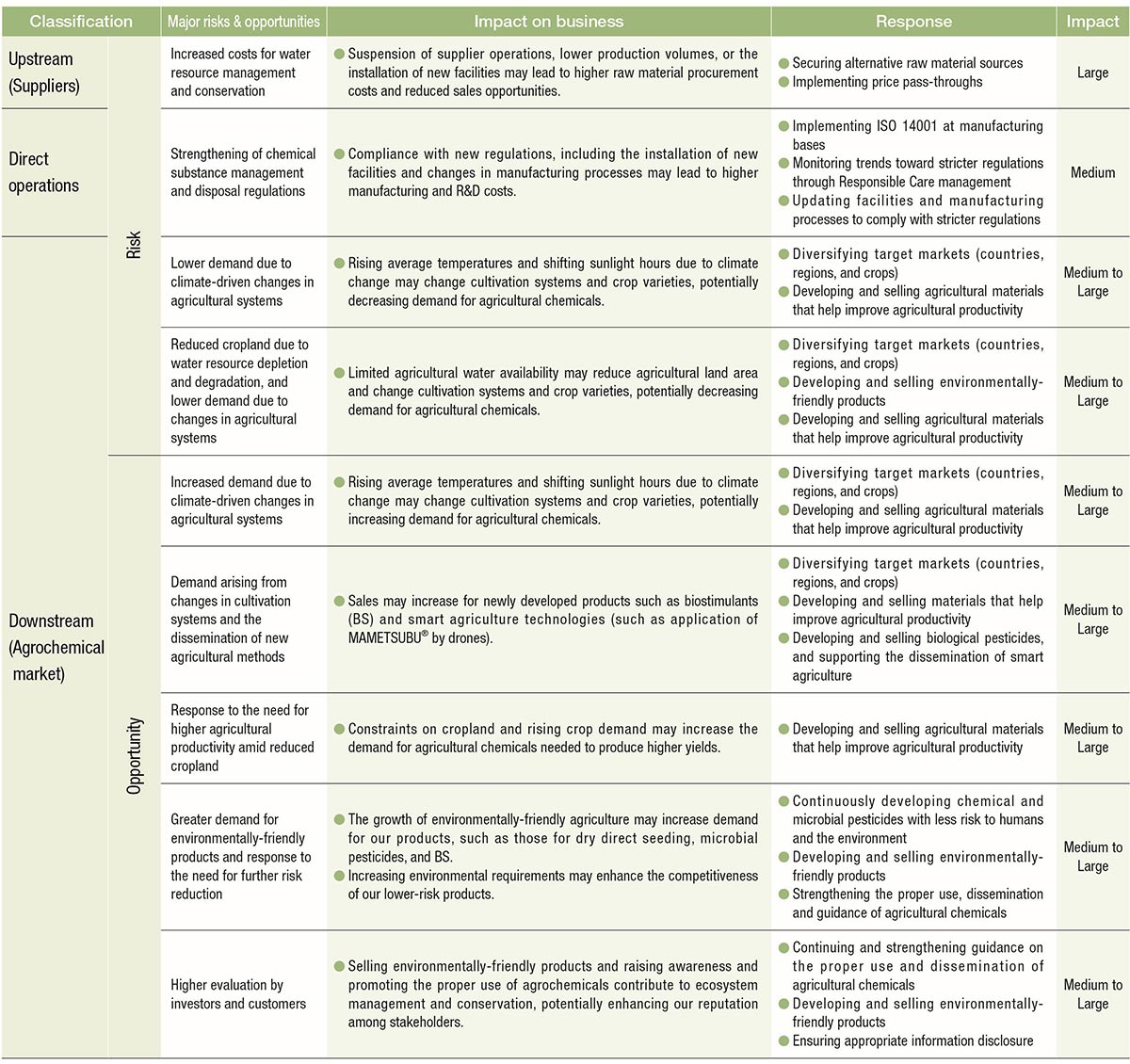
- *The "impact" is the financial impact on profit and expenses of an eventuality, and is evaluated based on the following criteria: "Large": three billion yen or more, "Medium": one billion yen to less than three billion yen, and "Small": less than one billion yen.
Developing Responses to Risks and Opportunities (Prepare)
Our group will develop and implement measures to address the dependencies, impacts, risks, and opportunities identified through the Locate, Evaluate, and Assess phases (the main measures for addressing risks and opportunities are described in the section “Major Risks, Opportunities, and Countermeasures Identified” above). As part of these efforts, we are implementing the following initiatives.
Initiative ❶ Development of agricultural materials that address agricultural issues
As an R&D-oriented company, we have been dedicated to developing agricultural chemicals to address crop production challenges since its foundation.
We remain committed to realizing sustainable agriculture in an era of significant environmental change.
Our mainstay product, AXEEV®, is a field crop herbicide that can be used for the world’s major crops, such as soybean, wheat and corn. AXEEV® was developed with the target that has better efficacy at one-tenth the dosage compared to conventional soil-applied field crop herbicides. Reducing the dosage not only helps lower the impact on water resources, soil, and surrounding ecosystems, but also contributes to reducing energy consumption and CO₂ emissions during product manufacturing and transportation.
Dry direct seeding is a method of rice cultivation in which rice seeds are sown directly into dry fields and then flooded them once the seedlings have grown. In Japan, this method is becoming increasingly popular as a highly efficient cultivation technique that eliminates the need to produce seedlings. In recent years, it has also garnered attention as a method that can help reduce GHG emissions and water usage. On the other hand, dry direct seeding is prone to weed growth before water is introduced, making weed damage a common problem. Our rice herbicide, NOMINEE®, is highly effective against a wide range of weeds when applied before flooding, and by helping solve weed problems in dry direct seeding, it also contributes to the spread of cultivation techniques with a lower environmental impact.
MAMETSUBU® is our original, labor-saving application formulation for paddy rice, inspired by carp feed. Because this product is lightweight and has excellent self-spreading properties, it has gained widespread support as a formulation that can help reduce the labor required for pest and weed control in paddy rice. It is also highly regarded as a formulation that minimizes environmental and human health impacts due to its low drift, and as a formulation that reduces energy consumption and CO₂ emissions during transport, thanks to its low application rate of 250 grams per 10 ares.
Our KUMIAI ECO Series is a microbial pesticide formulated by culturing beneficial bacteria and filamentous fungi found in nature. Since this series is not counted as the number of active ingredients in pesticides, they contribute to “reducing the use of chemical pesticides (risk-adjusted),” which is one of the KPIs of the MIDORI Strategy for Sustainable Food Systems that has recently garnered significant attention. Furthermore, this series complies with the Japanese Agricultural Standards (JAS) for organic agricultural products, contributing not only to reducing environmental impact but also to creating added value for crops.
Provide Environmentally Friendly Products and Services
Our first biostimulant NATSU-TSUYOSHI® activates the expression of heat shock protein (HSP) genes in plants. It is expected to mitigate heat-related damage to various crops, an issue caused by global warming in recent years, and contribute to solving issues at food production sites.
Launch of NATSU-TSUYOSHI, a biostimulant for measures against heat stress in crops(PDF file)
Initiative ❷ Development of products with less risk to humans and the environment
Our R&D departments promote Responsible Care activities, including development focused on chemical safety. These efforts include reducing the use of organic solvents in agricultural chemical products, developing formulations that minimize worker exposure, and developing formulations that reduce risks to non-target organisms and the environment. These activities also comply with risk-based management practices (new regulations on autonomous chemical substance management under the revised Industrial Safety and Health Act), under which businesses assess the risks and toxicity of chemical substances on their own and take appropriate measures to prevent hazards.
Initiative ❸ Implementation of an environmental management system (ISO 14001) at manufacturing bases
We implement ISO 14001 at all our manufacturing bases (three factories), pursuing continual improvement to protect the environment and adapt to changing environmental conditions, while balancing these efforts with socioeconomic needs.
Initiative ❹ Introduction of In-house manufacturing facilities with low environmental impact
At the Shizuoka Factory, the activated sludge treatment system uses deep underground shafts to treat approximately 1,500 tons of wastewater per day within a limited footprint. By returning treated water that meets regulatory standards, we remain committed to reducing our environmental impact.
Initiative ❺ Diversification of Target Markets
The degradation of natural capital, such as water and soil, as well as climate change, may lead to shifts in crop varieties, cultivation methods, and growing regions. Since demand for agricultural inputs, including pesticides, is closely linked to these agricultural systems, we recognize that addressing future market changes will require not only the research and development of new products but also the expansion of sales regions and target crops for existing products.
Domestic Product Application Expansion Registration Information
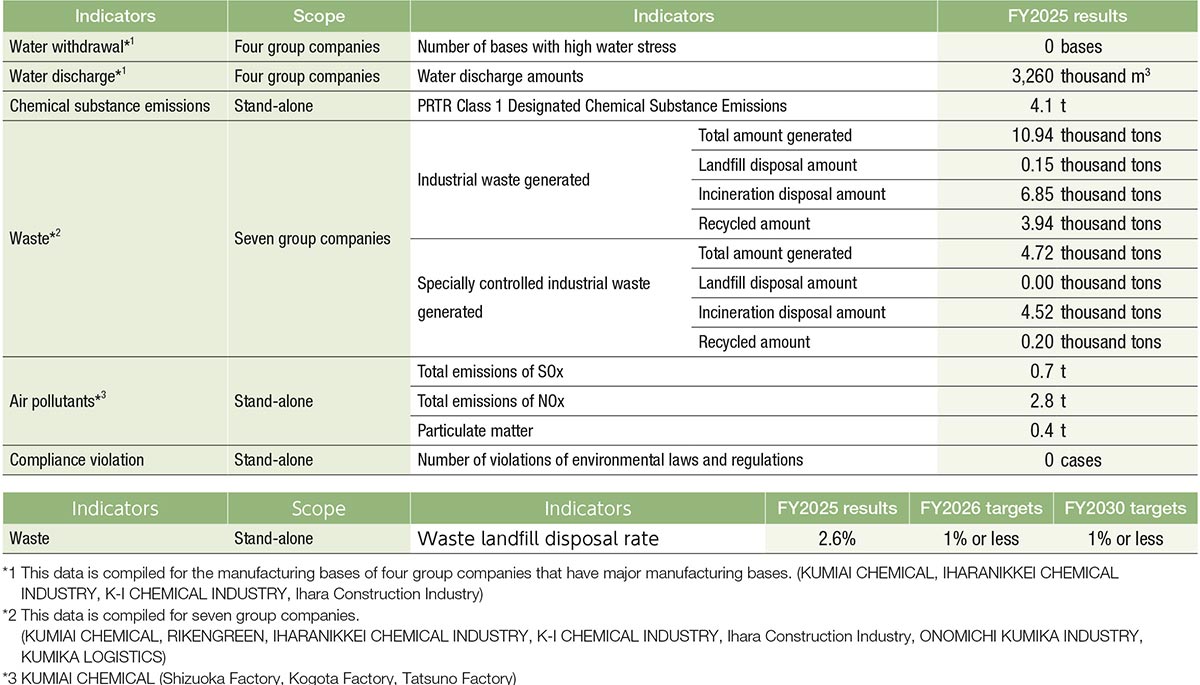
Indicators and Targets
The Kunming-Montreal Global Biodiversity Framework, adopted at COP15 in 2022, set a global target on natural capital, agriculture and pesticides of “halving the overall risk of pesticides and highly hazardous chemicals” by 2030. In Japan, the Strategy for Sustainable Food Systems, MIDORI, adopted in 2021, set specific KPIs for 2050, including “reducing the risk-weighted use of chemical pesticides by 50%” and “increasing organic farming area to 25% (1 million hectares)”. In line with these targets, we are advancing initiatives related to natural capital and biodiversity. Nature-related indicators have been organized with reference to the TNFD core global disclosure metrics and the chemicals sector-specific core disclosure metrics. Regarding nature-related goals, we have set the following targets at this time.